
A cyst or tumour in the bone? An accurate diagnosis and a clear plan
A new lump, bone pain that does not go away, or a cyst found on an X-ray? Most are benign, but an accurate diagnosis comes first. Eighteen years in orthopedic surgery, a King Faisal Specialist Hospital fellowship, and hundreds of benign and malignant tumour cases.
- Consultant orthopedic and bone tumour surgeon
- Eighteen years in orthopedic surgery
- King Faisal Specialist Hospital fellowship
- Hundreds of benign and malignant tumour cases
 Book your appointment atAs-Salam Hospital – Capital

When should a lump or bone pain be checked?
Most lumps and cysts are benign, but some signs call for an early examination.
- A lump that is growing, especially one larger than five centimetres or lying beneath a muscle
- Bone pain that is worse at night, wakes you or continues with rest
- A fracture after a very minor injury or none at all
- A cyst or spot on an X-ray found by chance
- Swelling of a bone or joint with no clear cause
- Weight loss or fever with bone pain
Do not have a lump removed anywhere on the body before it has been properly assessed. An unplanned operation on an undiagnosed tumour can make later treatment harder [1].
What does an orthopedic oncologist do?
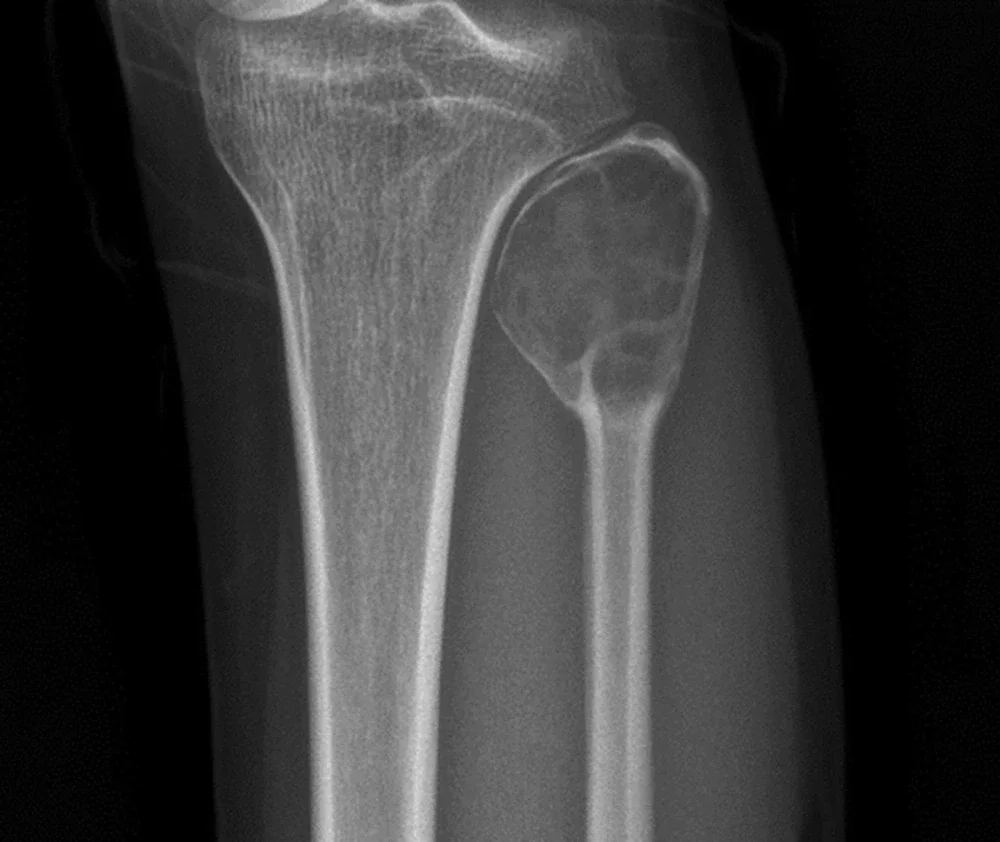
An orthopedic oncologist is an orthopedic surgeon who specialises in diagnosing and treating tumours of bone and soft tissue, benign or malignant, as well as bone cysts and fractures caused by tumours.
The role includes examining the patient and requesting suitable imaging, planning the biopsy correctly, interpreting the results with the radiologist and pathologist, setting out the treatment plan, and operating, including removing the tumour while saving the limb and rebuilding the bone and joint when needed.
The surgeon works within a team of oncologists, radiation oncologists, radiologists, pathologists and rehabilitation staff, because treating malignant tumours does not depend on surgery alone.
My experience in orthopedic oncology
I have eighteen years of experience in orthopedic surgery, graduated from the fellowship at King Faisal Specialist Hospital and Research Centre, and have treated hundreds of benign and malignant tumours of bone and soft tissue.
I begin every case by establishing the diagnosis accurately, then explain the test results and treatment options in plain language, without promising guaranteed results, because the outcome depends on the type and stage of the tumour and the patient's condition.
Common benign cysts and tumours
Benign lesions are the commonest, and many need nothing more than follow-up. Treatment depends on size, site and the risk of fracture.
| Where and in whom? | What marks it out | Follow-up and treatment | |
|---|---|---|---|
| Simple bone cyst | Bones of children and teenagers, such as the humerus and femur | A fluid-filled cyst, sometimes found when the bone breaks | Observation, or injection or curettage with grafting if there is a risk of fracture |
| Aneurysmal bone cyst | Children and young adults | A cyst that can grow quickly and expand the bone | Curettage and grafting, or local treatment depending on the case |
| Giant cell tumour of bone | Young adults, near the knee or wrist | A local tumour that can recur and may damage the joint | Curettage with adjuvant treatment, and sometimes a supporting drug depending on the case |
| Enchondroma | Bones of the hand, femur and humerus | Usually no symptoms, found by chance | Follow-up, or curettage if painful or at risk of fracture |
| Osteochondroma | Near the knee and shoulder | A hard bony projection that may press on its surroundings | Removed if painful, pressing or growing |
| Osteoid osteoma | Children and young adults | Night pain relieved by painkillers | Local ablation or surgery |
| Fibrous dysplasia | Any bone, usually in young people | Weak bone that may deform or fracture | Follow-up, or fixation of weak bone |
| Lipoma and soft tissue lumps | Under the skin or between muscles | A soft or firm slow-growing lump | Assessed with MRI, and removed if large or unclear |
This is a general table for information. The type of any cyst or tumour cannot be confirmed without an examination and imaging, and often a biopsy.
Malignant tumours of bone and soft tissue
Osteosarcoma
The commonest primary malignant bone tumour, usually in teenagers and young adults around the knee and shoulder. It is usually treated with chemotherapy and surgery.
Ewing sarcoma
Affects children and young adults, and can appear with pain, swelling and warmth that resemble infection. It is treated with chemotherapy, surgery and/or radiotherapy.
Chondrosarcoma
A tumour of adults, with a plan that depends on its grade, and surgery is the main treatment for most.
Soft tissue sarcoma
Tumours in muscle and other soft tissue, such as liposarcoma, usually appearing as a lump that may not hurt. Treated with surgery, sometimes with radiotherapy or chemotherapy.
Bone metastases and myeloma
The commonest tumours in adult bone are metastases from other organs. They are treated to relieve pain, prevent fracture and stabilise weak bone, together with the oncologist.
How is a tumour diagnosed?
Diagnosis starts with an examination and plain X-rays, then an MRI to define the size of the lesion and its relation to nerves and vessels, and a CT, bone scan or PET scan may be added to assess the rest of the body.
If a biopsy is needed, it is best planned and performed by the surgeon who will treat the patient afterwards, or in consultation with them, because the site and route of the cut affect the final operation [3].
Treatment: saving the limb and rebuilding
Most benign tumours are watched or treated by curettage and grafting with bone or medical cement, with fixation of the bone if there is a risk of fracture.
In malignant tumours, the aim is to remove the whole tumour with a clear margin and to preserve the limb and its function where possible. A pooled analysis of osteosarcoma studies found that limb salvage surgery was not worse than amputation for survival [2], but the choice depends on the size and site of the tumour and its relation to nerves and vessels.
The bone and joint are rebuilt after removal with a bone graft or a special artificial joint, and rehabilitation then starts under a therapist.
Why not remove a lump before it is diagnosed?
A lump removed before its type is known may be a sarcoma, and part of it may be left behind. A systematic review of more than sixteen thousand patients found that unplanned excision of soft tissue sarcoma was linked to more local recurrence, with residual tumour in the surgical bed the strongest factor [1].
That is why imaging and an MRI are advised first for any large, growing or deep lump, before any operation.
What happens after the examination?
Steps vary with the type of condition.
- Examination and imagingA clinical examination and X-rays, then an MRI or CT to define the type and size of the lesion.
- Biopsy if neededThe biopsy is planned carefully, and the results are interpreted with the pathologist and radiologist.
- Treatment planFollow-up or surgery, and for malignant tumours the oncology team is involved for chemotherapy or radiotherapy.
- Rehabilitation and follow-upPhysiotherapy and rehabilitation, and regular imaging follow-up for years.
Frequently asked questions
What is the difference between a benign and a malignant tumour?
A benign tumour does not spread to other organs and usually stays local, while a malignant one can spread. Some benign tumours can still grow, weaken the bone or recur, so they need follow-up.
Does every bone cyst need an operation?
No. Many small cysts need follow-up only, and treatment is advised when the cyst grows, causes pain or puts the bone at risk of fracture.
Is a lump in my arm or leg a sarcoma?
Usually not, as most lumps are not sarcomas. A large, growing or deep lump still needs an MRI and an examination before it is removed.
Is amputation needed for malignant tumours?
In most cases the limb can be saved, and amputation remains an option in a few cases when the tumour cannot be removed while keeping a working limb [2].
Do I need a biopsy before treatment?
Often yes, for lesions where imaging is not enough to diagnose. The biopsy is planned carefully so that it does not affect the later operation [3].
Can my child's bone cyst be treated without surgery?
Some simple cysts can be watched or treated by injection, and the examination, X-rays, the site of the cyst and the risk of fracture decide this.
How do I book an examination for a tumour or bone cyst in Kuwait?
You can call the As-Salam Hospital – Capital call center on 1830003 to book an appointment with Dr Abdullah AlQaseer.
Dr Abdullah AlQaseer
Consultant orthopedic, hand and microsurgeon with an interest in bone and soft tissue tumours. Eighteen years of experience in orthopedic surgery, a fellowship at King Faisal Specialist Hospital and Research Centre, and hundreds of benign and malignant tumour cases. I see patients at As-Salam Hospital – Capital.
A lump or bone pain? Start with a diagnosis
You can book an examination by calling the As-Salam Hospital – Capital call center.
This content is for general information and does not replace a medical examination. Results vary from patient to patient and nothing is guaranteed.
Scientific references
- Larios F, et al. Is unplanned excision of soft tissue sarcomas associated with worse oncological outcomes? A systematic review and meta-analysis. Cancers. 2024;16(2):443.
- Amputation versus limb-salvage surgery in patients with osteosarcoma: a meta-analysis. 2016.
- Overview of limb salvage surgery (limb sparing surgery for bone tumors). Bonetumor.org.