
A finger that catches when it bends, usually simple to treat
A finger that catches or locks as you bend it, then snaps straight with a click and pain at its base? This is trigger finger. Learn what causes it and the options, from a splint and injection to a short operation.
- Consultant orthopedic and hand surgeon
- Hand surgery fellowship – Leeds, UK
- Kuwait Board in Orthopedic Surgery
 Book your appointment atAs-Salam Hospital – Capital

How do I know it is trigger finger?
Signs are often worst in the morning and ease during the day, and it affects the thumb, ring and middle fingers most often.
- A finger that catches when bent, then snaps straight with a click
- Pain or a small tender lump at the base of the finger in the palm
- Stiffness of the finger in the morning
- The finger may stay locked bent and need the other hand to straighten it
- One or more fingers can be affected, and it can occur in both hands
Trigger finger rarely needs urgent treatment, but if the finger stays locked or the problem keeps coming back, book an examination.
What is happening?
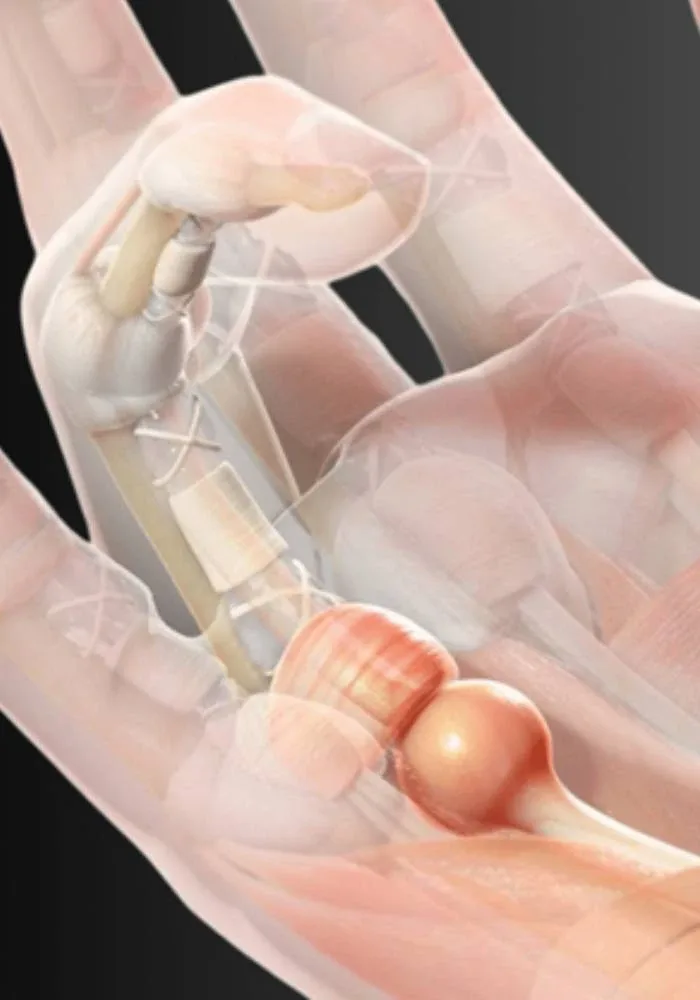
The flexor tendons glide through small tunnels in the finger called pulleys. When the first pulley at the base of the finger becomes inflamed or the tendon swells under it, the tendon struggles to pass, so the finger catches and then snaps free.
It is more likely with diabetes, rheumatoid arthritis and repeated forceful gripping, and it is more common in women over forty. Often no clear cause is found.
What are the treatment options?
Treatment usually starts with the simplest step, and the next step depends on how severe and how long-standing the problem is.
| When is it used? | The idea | Notes | |
|---|---|---|---|
| Rest and a splint | Mild or recent symptoms | Rest the tendon and settle the inflammation | It may settle, or the symptoms may return |
| Steroid injection | Moderate symptoms not helped by rest | Reduce the inflammation around the tendon | Works in many cases, but symptoms can return [1] |
| Pulley release operation | Persistent symptoms, return after injection, or a locked finger | Open the tight pulley so the tendon glides freely | A short operation under local anaesthesia, with quick return of finger movement |
What does the evidence say? A pooled analysis of randomized trials found that surgery had a higher success rate than steroid injection at all follow-up times [1], and a Cochrane review found that open surgery reduced recurrence of triggering compared with injection but was more painful, with low-quality evidence overall [2]. The choice is therefore made for each patient.
How is the operation done?
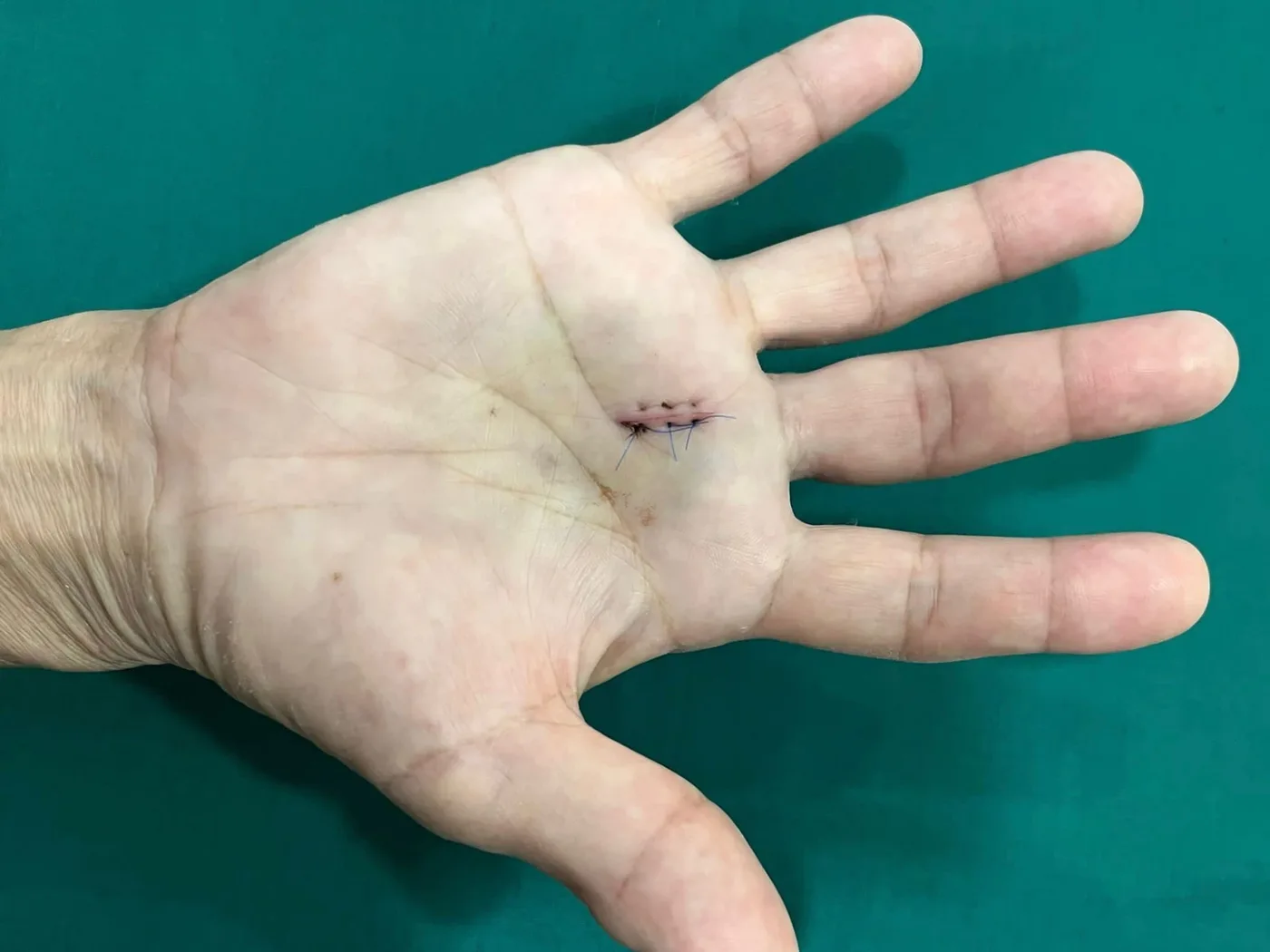
It is usually done under local anaesthesia as a day case. A small part of the tight pulley in the palm is opened so the tendon runs freely, the skin is closed, and you are asked to move the finger the same day.
Most patients return to light use of the hand within days, and the wound is left to heal for several weeks before heavy work.
What happens after treatment?
Stages are approximate and vary from patient to patient.
- After an injectionYou may have mild soreness for a few days, and the finger usually improves over days to weeks.
- After the operationMove the finger from the same day, and keep the wound clean and dry until it heals.
- The following weeksSwelling and stiffness settle gradually, and exercises may help regain full movement.
- Long-standing casesSome stiffness of the joint can remain if the finger has been locked for a long time, so a locked finger should not be ignored.
Frequently asked questions
Does trigger finger go away by itself?
Mild cases may settle with rest, but many persist or return and need an injection or an operation.
Can symptoms come back after an injection?
They can, especially in people with diabetes, and if they keep returning the operation is discussed as a more lasting option.
Is the operation painful?
It is done under local anaesthesia, and mild soreness in the wound for a few days is eased with simple painkillers.
Can the same finger trigger again after surgery?
Release treats the cause directly, so it returns less often, but another finger can be affected.
When should I see a doctor?
When the catching keeps happening, the finger stays locked, or pain affects your work or sleep.
Dr Abdullah AlQaseer
Consultant orthopedic, hand and microsurgeon, with a hand surgery fellowship from Leeds (UK) and the Kuwait Board in Orthopedic Surgery, and seventeen years of experience. I see patients at As-Salam Hospital – Capital.
Do not put up with a finger that catches every day
You can book an examination by calling the As-Salam Hospital – Capital call center.
This content is for general information and does not replace a medical examination. Results vary from patient to patient and nothing is guaranteed.